Beautiful Spring + Summer Hats from 1930

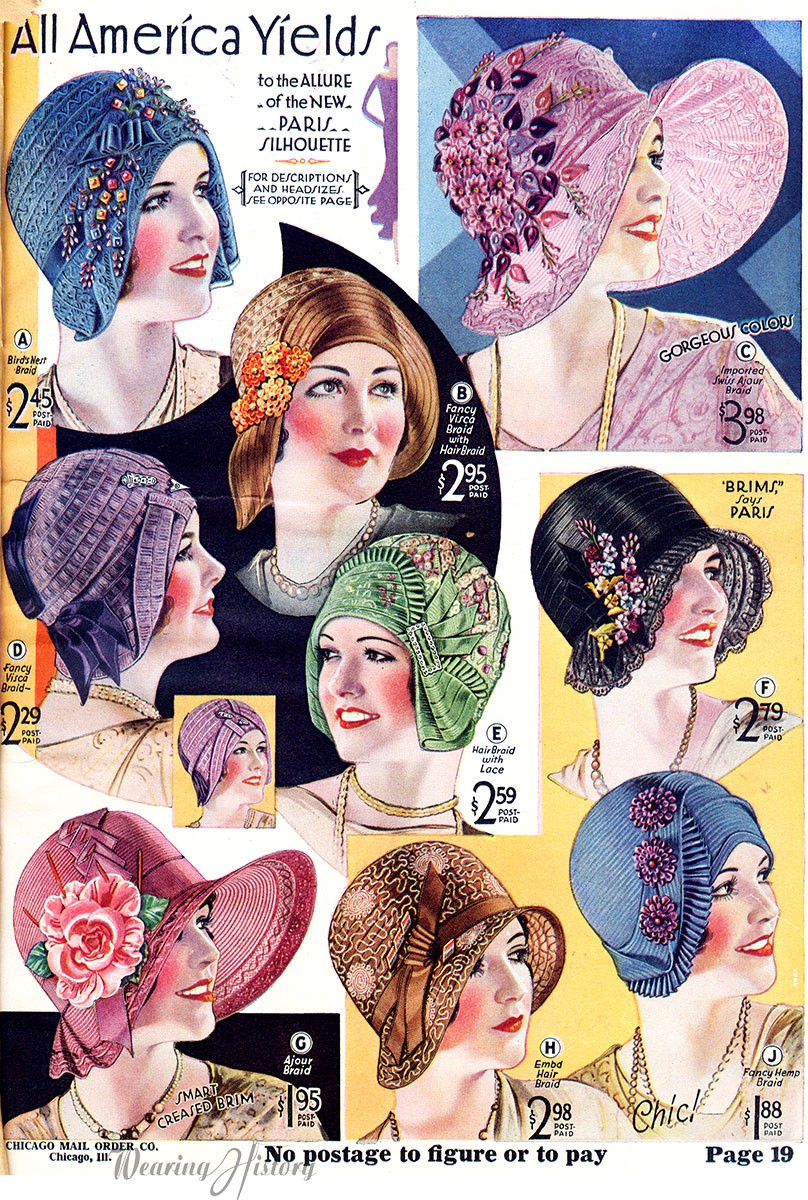
I have a very special treat for you this evening.  Here are some absolutely gorgeous images of hats from the Chicago Mail Order catalog from Spring and Summer 1930.

Aren’t these just exquisite?

Click the image above to read descriptions of the color image below.

Click the image below to read the descriptions of the image above.

Just stunning!  This has to be one of the best periods for hats EVER.  *swoon*

Don’t forget to enter the giveaway that Debbie of Vintage Dancer has generously offered to my blog readers!  The giveaway ends tomorrow night!!  Click here to be taken to the post.

Happy Almost-the-Weekend! :)

His Girl Friday at the La Jolla Playhouse!

I can finally share some of what I have been up to at work!  For those who didn’t know, I’ve been working as a First Hand at the La Jolla Playhouse since the winter.  It’s been really great work and I love my co-workers.  So, you can’t even anticipate how excited I was when I heard our present show was one of my all time favorite movies- His Girl Friday, and the show takes place in 1939!  And we got to work with famous Costume Designer, Paul Tazewell, which was fantastic.  He really researches everything and is as particular about period details as I am :)

Our team was responsible for buliding the lead female ensembles (minus hats and crafts), so we built things for Hildy, Molly, and Mrs Baldwin.  Here’s some promotional stills that are property of the La Jolla Playhouse to illustrate:

Here’s a few of the close up shots I took of the costumes while we were building them.  They were so detailed and structurally well built (if we do say so ourselves), that I had to share the details you might not catch on stage.

Here’s an “in progress” shot of Mrs Baldwin’s coat.  This was before we added the rhinestones, bows, and the butterfly frog (that you can’t see in the promo shots, but if you go see it in person you’ll get to see it!).  And yes, we had to attach all that lace by hand!

Here is an up close shot of Hildy’s suit coat.  We based the shape of the body off of an original vintage pattern in my collection and then Sarah Maisel, our talented draper and ukelele superstar, changed the pattern to our needs.  Karen, our master stitcher, actually stacked the pieces one on top of the other, and bagged out all the corners using silk organza.  And, of course, it’s got the tailoring “guts” all in there.  We had help of many stitchers in all the projects, but I think they came out just beautiful.  A real group effort!

We got to costume Jenn Lyon as “Hildy Johnson”, Mary Beth Peil  as “Mrs Baldwin”, and Bethany Anne Lind as “Molly Malloy”, and they were all a dream to work with!

His Girl Friday runs now through June 30th at the La Jolla Playhouse and features many talented actors and a great creative team.  You can read more about the cast here (pdf file).  I haven’t seen it yet but am so excited to see it soon!  It’s a combination of The Front Page (the original 1920s play) and the 1940′s His Girl Friday film we’re all so familiar with, with a few original twists thrown in the mix, too.

I hope you can see it!  Get more info and buy tickets at The La Jolla Playhouse website.

Textile Inspiration- Pairing Dress Fabrics, 1939

Hello all!  Long time no post! I’ve been a bad, bad, blogger.

We’re currently working on a new production of His Girl Friday at the La Jolla Playhouse.  I’m so excited, and feel so blessed to be working on one of my favorite movies in one of my favorite time periods and years for fashions!  They’re setting the play in 1939 and I’m loving the costumes we’re building.  Of course, that means I’m wanting to make all sorts of 1939 fashions for myself!  Here’s some great images that I’m inspired by, from the Spring and Summer of 1939 Chicago Mail Order catalog.

What I love about this, and several other fashions from the late 1930s, is how some of them actually look like seperates but are actually a dress!   These dresses often include a few different fabrics in order to get a very tailored look.  In these pages it’s called the “basque styles”.

Even if matching different weight or style fabrics isn’t your thing, these pages are inspiring for what to do with trims.  Bows, buttons, ruffles… you can take a relatively simple dress and add a lot of whimsical details to make it more fun.

Although these styles are aimed at juniors, you can tone the proportions or styles down in you don’t want something so playful or “youthful”.

1939catalog1
1939catalog2

Hope the rest of your weekend is wonderful!

A Fashionable 1930s Wedding

The weekend before last we were fortunate to attend the wedding of our friends Robert and Ashley (of Miss1940sVintage).  They are quite the couple from the past- and totally immerse themselves in their chosen eras of the 1930s and 1940s.  When they announced that their wedding was “Garden Party Circa 1930s” themed, we were not in the least surprised.  Given the lovely and creative dressing of the vintage scene in Los Angeles and San Fransisco (as many of the guests came down for the wedding) , the guests relished in the chance to dress the part to celebrate the union of their friends.

The bride wore vintage, with a borrowed lucky veil which belongs to talented singer and pianist Sara, of Sara & Swingtime.  All of the bridesmaids are clad in gowns created by the talented custom couture dressmaker and Simplicity pattern designer Theresa LaQuey (whom I finally got to meet for the first time at the rehearsal dinner).  The bride and her bridesmaids were picture perfect and the setting at Forest Lawn looked like it was just right out of a real 1930s film!

The Bride looked gorgeous and her flowers were period perfect!  They were made by Sharlene of LA Deco Flora.  The bride’s makeup was done by the talented Katharina of GoForKat (who also did the makeup of several of my photo shoots for Wearing History patterns).

The groom and all his groomsmen looked impeccable in vintage morning suits.  The joy of the groom in this photo, taken just after the ceremony,  makes me happy.

And, of course, all the guests looked fabulous!

The talented up and coming music artist, Mary Simich.  Her outfit was created by her own personal couturier, Mr Tiny of Wacky Tacky.

All the old cars were parked in front of the church for a fabulous photo op.  Here’s my husband’s top hat he wore at our wedding is perched on top of our friend’s Packard.

Of course, when you get old cars together you sometimes get the…. unpredictable.  In this case, we watched some of the groomsmen and guests give a friend a push to get it started.

En route to the reception we had fun following our friend’s car and seeing two of the European visitors getting a kick out of riding in the rumble seat.

The reception was held at our friend, Nathan’s, beautiful Edwardian home.  Here’s some snapshots from the reception.

Guests listening to toasts.

My husband looking very distinguished in the library.

And hamming it up, as usual.

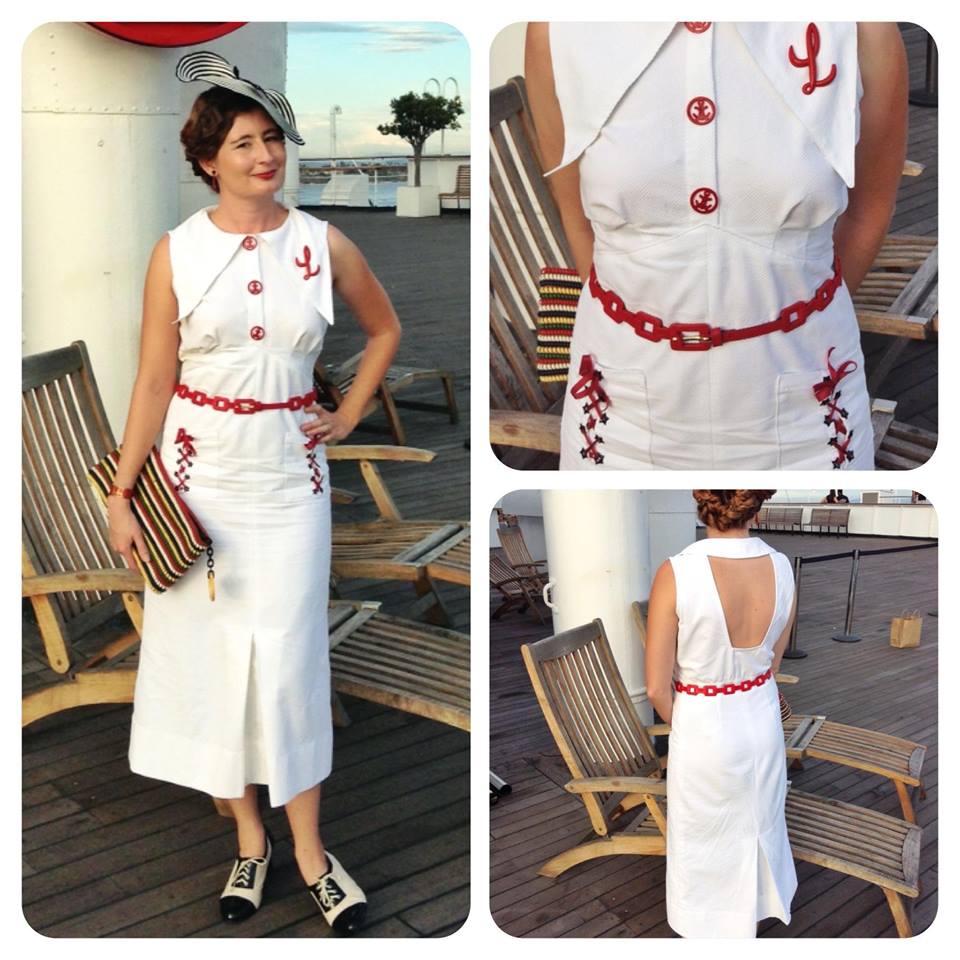
I wore a vintage 1930s dress I had held onto for several years, waiting for just the right occasion to wear it.  This fit the theme perfectly!  I made the hat to match by converting a horsehair hat I bought at the thrift store to a more 1930s style.

Many congratulations to the bride and groom!

Finished Project: The Dust Bowl Dress

The project for the Historical Sew Fortnightly Challenge this time was “Peasants & Pioneers.”

From the event page on Facebook:

“As wonderful as making pretty, pretty princess dresses is, the vast majority of people have always been poor commoners, whether they were peasants working the land, servants in big houses, or (later), pioneers carving their own space in new lands. This fortnight let’s make something that celebrates the common man.”

This automatically made me think of the dust bowl and the great depression.  The incredible hard times that people of my grandparent and great grandparent’s generation had to endure.  I want to celebrate something in our more recent history, within the memory of many of those still alive today.  The great depression, of course, hit across our nation (and internationally as well), but the dust bowl hit only part of the country, causing incredible hard time among those in the path of the dust storms, and forcing many to “pioneer” out to places for a new start, like California, in order to pick crops or use their farming skills where the soil was still fertile.

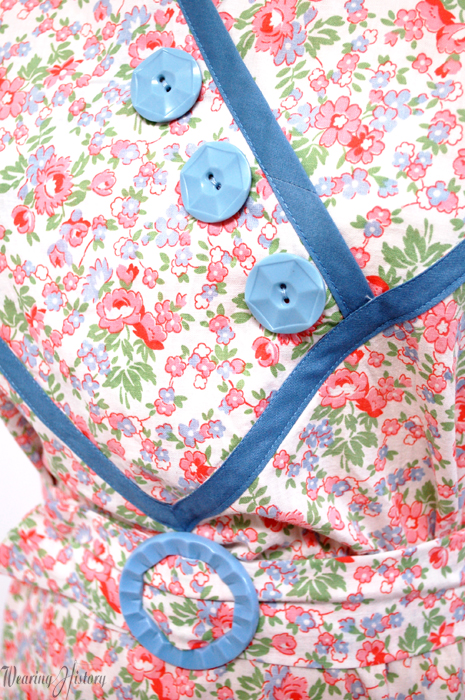
The dress I made is from all vintage materials.  I was fortunate to find a long length of vintage cotton print that I found reminiscent to the feed sack prints the ladies of the dust bowl would have used to make their clothing.  These were actually flour or feed sacks, and a housewife would collect them to make clothing for her family, or sew items for the home.  The buttons, buckle, and the bias tape are all vintage as well.  This is finished on the inside with rayon seam binding.

Very contrary to the dust bowl, today is a very cloudy and rainy day.  I was hoping to take pictures next to some old west style historic buildings, but it was not meant to be!  Since it’s a dark day, it is very hard to capture the colors correctly.

Without the belt, the dress looks rather 1920s.

A closer shot of the detail, which is more true to actual color:

This was made from a  mail order pattern from the earlier part of the 1930s, similar to what farming ladies would have used to make their clothing.  I have a copy, as I sent my original to a friend in England.  Although the dress in the illustration looks rather sporty, I wanted to take inspiration from vintage farm dresses and aprons, so added the bias tape to make this look more like a house dress.

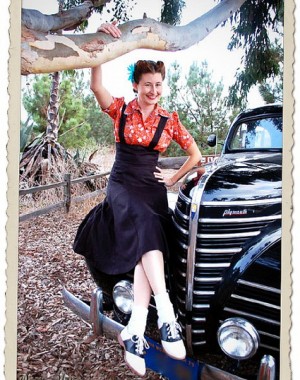
Some inspiration images for this project that were found online:

{Source}

{Source}

{Source}

{Source}

Required info for this challenge

The Challenge: Peasants & Pioneers

Fabric: Vintage cotton print

Pattern: Mail Order 1918

Year: First half of the 1930s (about circa 1932-1934)

Notions: Vintage bias tape, vintage buttons, vintage buckle

How historically accurate is it? Very.  Without finished seams it would be more period, but I wanted to protect from fraying when washing.  The thread is poly, which is not period, but otherwise it’s totally dead on.  I found prints almost identical in a 1934 Sears catalog.

Hours to complete: Around 5-6.

First worn: Not yet!

Total cost: About $25 (not including pattern)

Keeping Warm in the 1930s: Rain and Snow

I’m a bit under the weather today, so I figured I should post another set of images in the “Keeping Warm” series.

Here’s two pages of catalog images from 1937-1938 showing coats to be worn in the rain, and outfits for play in the snow.

rainyweatherfriends

I find the fabric descriptions pretty fascinating. Rubberized fabrics like silk crepe de chine or cotton tweed, all rubber, or cotton gaberdine or whipcord- which were both supposed to be water repellent on their own. Also notice the sensible headwear, umbrellas, and rubber overshoes (which are made of rubber and hollow in the heel so that you can slip your regular footwear inside. I think they should make a comeback!).

snowfun

This image shows darling snow wear! I admit I have a love for the vintage ski jackets- but I’d rather wear them in regular life than in ski and snow sports. I think they’d look pretty cute even with modern jeans! I personally think ski and snow wear has come a long way since the 1930s. Although I’ve never tried it in the snow myself, it’s hard to imagine these “water repellant” styles keeping you dry, if you spend as much time as I do falling down or sitting in snow ;) These are all mentioned to be lined in cotton Kasha. I have not personally ever run across this fabric. If anyone knows what the modern equivalent is, or if it’s still available, please be sure to let us know!

Wishing you a warm weekend,
Lauren

Early 1930s Evening Gown Made from Loretta

Believe it or not, I had this sample finished probably around two months ago but could never get the time together to take photos!  Well, finally, here she is!

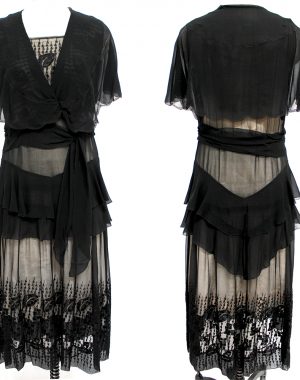
This is the evening gown version of Loretta- 1930s Day & Evening Dress, which is available in size 32 or 36 bust as a Resto-Vival pattern.

This pattern is typical of the very early 1930s (I found newspaper clippings inside the original pattern that were dated 1931), as it’s a midpoint between the loose fit in the torso of the 1920′s and the tighter fit in the hips of the 1930s.  The rows of tucks at the waist create a bit of a shape at the sides, but leave the center front and center back loose.  This pattern has an optional side bow. I’ve shown it here with and without the bow so you can see the potential in this lovely old pattern.

I especially love the look of the long pointed style lines on the skirt!

You can find this pattern here on my Wearing History Patterns website.

Hope you had a great weekend!

Keeping Warm in the 1930s- Overcoats!

Now that’s we’ve taken a quick look at what goes on underneath, let’s skip to what goes on top!  Many gals have mentioned that layering is what’s needed, since it can be frigid inside and then toasty indoors.  Luckily, we can remove the overcoat.

Unlike today, when a girl can choose (or thrift, or make) several coats in one season, our counterparts in the 1930s would have to choose very wisely.  Most women had one overcoat, and that coat had to last through several winters.  Because of that, overcoats needed to be chosen with great care and thought.  It had to match your wardrobe, go with your other clothing, and fit your unique style.  This is why, often times, vintage overcoats could be a bit “bland”.  The flashy ones were fun, but were more the luxury of women who could afford to have an alternate coat- or else the purchase could be regretted the following year when the fashion forward coat was suddenly out of style!  It’s actually a great lesson to take with us into how we select our wardrobe today.  Think of it as quality over quantity- or choose a great basic to mix with more inexpensive “fun” pieces, like a quirky hat, bag, or brooch.

However, I am in LOVE with all these more fashion forward versions of coats below.  They scream the era they’re from, but aren’t they just delightful with their topstitching detail?  (Actually, they’re a glimpse of things to come for Wearing History, since I’ve been back puttering away at a pattern with similar detailing, but from a different era).

National Bellas Hess- Fall and Winter 1937-1938

The one below has a definate “Gay 90′s” flair, as they called it in the mid to late 30s. What a time to harken back to the 1890s! It’s kind of funny, actually- our harkening to 40 years prior would put us in the 1970′s, and we can’t say that there aren’t fashions floating around today that were influenced by the recent past.

National Bellas Hess- Fall and Winter 1937-1938

I’ve got more great coat images I can share that fall more in line with “warmth” than “chic”, but these were so fun I had to share.

For past posts of mine with images of overcoats, check out these links:

 Images posted prior to my migration to a WordPress.org blog are fuzzy, but if you click on the image it will take you to a nice clear version.
Have a great weekend!

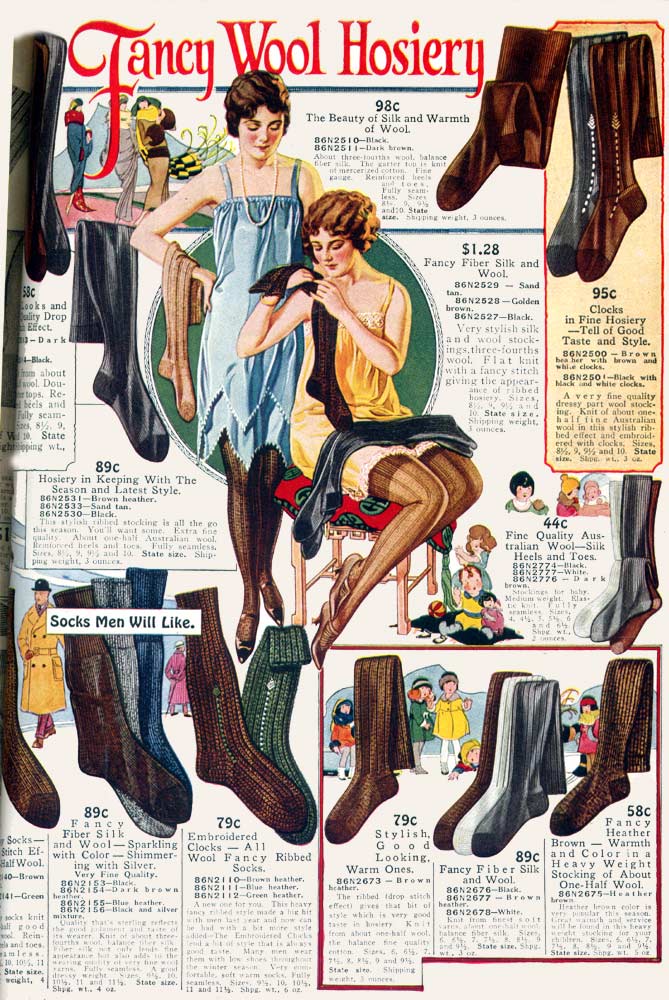
Keeping Warm in the 1930′s- Socks and Stockings

I’m so glad that so many of you loved the theme of “keeping warm” for upcoming posts!  I admit there was a lot more response on the last post than I expected.  I guess there’s lots of us who like keeping warm and toasty!

Next up, since we’re on the subject of what goes on underneath, we’ve got stockings.

Most people think of stockings of the 1930s and 1940s in terms of the “cuban heeled” or “fully fashioned” stockings that were sheer and made of rayon, nylon, or silk.  Some even think of fishnet stockings, which were less common than we might think but certainly were still around.  And when we get to the 1940s we think of leg paint to help out with looking like there were stockings when in reality they were mostly given up for the war effort!

For everyday wear, around the house, or for cool weather there were, thankfully, more options than those sheer stockings we usually think of.  Here’s two pages of legwear options from Fall & Winter 1937-1938 with images of legwear to keep you warm.

National Bellas Hess- Fall and Winter 1937-1938

The socks (or anklets) at upper left were advertised to be worn in addition to your hoisery.  Ladies wore these not only with flats and “saddle shoes”, but they were often worn with heels!  It was a cute, sporty look, and it kept your feet warm.  It wasn’t as common to wear with heels as it was to wear stockings alone, but you do see it in catalog images for footwear and in real life photos.

“Remember- Wool is Warmer”- the ad on the right reminds us.  You could select your stockings by wool content.  The ultimate luxury were 100% wool or a wool/silk blend.

Below this ad, we’ve got invisible “under hose”.  These would be an extra layer underneath your sheerer stockings, and apparently, the idea was to have these under hose look like it was actually your skin but it provided an extra layer of warmth.

And below that we’ve got stocking lined in fleece!  Don’t those sound cosy?

National Bellas Hess- Fall and Winter 1937-1938

On the page above we’ve got cotton stockings in various styles.  These would keep your warmer than sheer rayon or silk and would would be more sturdy for everyday wear.

And on the left we’ve got the “outsize” stockings, which were made for “stout” women.  You can see the standard range that most stockings, in regular or outsizes, were available in.

I usually skip over the stocking pages in old catalogs, but I found these cool weather options rather enlightening!  Are they what you would expect?  What sort of legwear do you wear to keep warm in cool weather?

Keeping Warm in the 1930′s- Knit Underwear

It’s abnormally chilly here in San Diego!  This cool weather has me thinking of things to keep warm.

One of the biggest misconceptions that I’ve seen and heard about dressing the past is our perception of keeping warm.  Just like today, our 1930′s sisters layered and selected their cool weather garments with care.  Instead of freezing in rayon satin tap pants and sheer hose, with a flimsy rayon crepe dress and jacket of questionable warmth, I’ve got a few posts coming up of images of what you’d wear to keep nice and toasty in cool weather.  It’s easy to adapt these ideas to our wardrobe recreations.  Remember no one looks chic while they’re shivering!

First up, here’s some great images of knitted underwear.  If you’ve looked at vintage knitting books, you may recognize the look of these.  Many knitted books contained patterns for wool knitted underwear like these (similar to long johns today).  It seems they were especially prominent in UK publications.  So, a clever knitter could find patterns today and knit up a set to keep warm- or the seamstress might be able to make up a set inspired by these from knits, or adapt a modern set of long underwear to a similar look (remember, cotton and natural fibres dye, so you could give them a pretty peachy pink look like these below).

Some might be turned off by these- they’re not the satin and lace dainty underwear we’ve come to associate with the 1930′s.  But, remember, it’s better to be warm and outwardly stylish than shivering in cold rayon undies that will never be seen!  Sense is always chic ;)

Check it out… the original Snuggie!

National Bellas Hess- Fall and Winter 1937-1938

National Bellas Hess- Fall and Winter 1937-1938

National Bellas Hess- Fall and Winter 1937-1938

National Bellas Hess- Fall and Winter 1937-1938

All of these images are remastered from the National Bellas Hess Fall & Winter Catalog from 1937-1938

You can click on any of the images to take you to my Flickr and see a larger version you can read.

So what do you think?  Would you be up for these vintage warm undies, or would you rather wear something modern, or stick with the rayon ones we’ve come to associate with the 1930′s?