Finished UFO Project, and a Peek at Things to Come…

Did you know that The Dreamstress is hosting a neat Facebook sewing motivation group for this year?  It’s called the Historical Sew Fortnightly, and every two weeks there’s a new challenge.

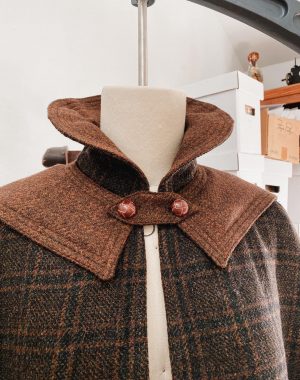
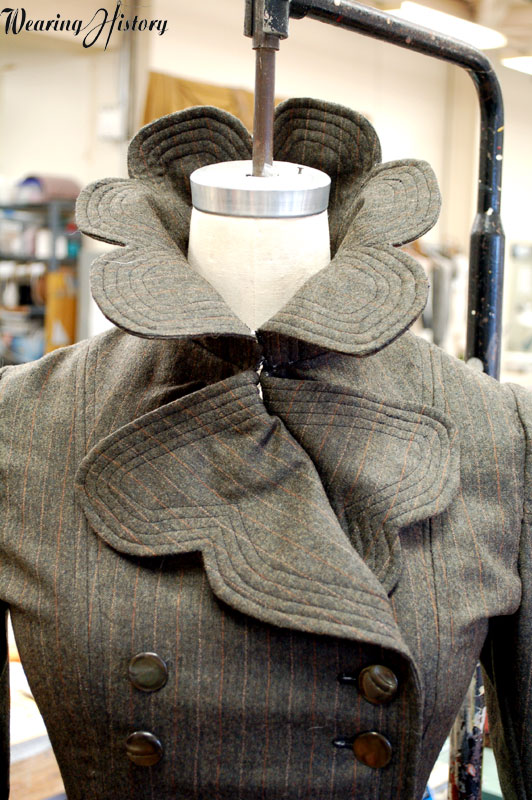
I missed the last challenge, but I got this one finished in time for the UFO theme (unfinished object).  This jacket was based on an 1899 jacket pattern from La Mode Illustree, and I don’t mind saying now, that this is the pattern that I’ve slowly been working on in my free time as the next Wearing History pattern release.  The project was started a year or two ago, with an original pattern, but gradually morphed into a grande project, as I kept finding more and more that I needed to do to make the pattern more accessible and understandable (markings, seam allowances, grainlines, and instructions were all missing, and the pattern pieces needed alterations to get them to fit together correctly).  I’ll have more info on it once it’s completely finished and I have the pattern up on my site, but for now I’m just glad to share preview pics I took at work today :) I went all out on this jacket and did a bunch of tailoring on it to make it extra nice.


This Easter’s Hats and Bonnets- Ladies Home Journal- April, 1897

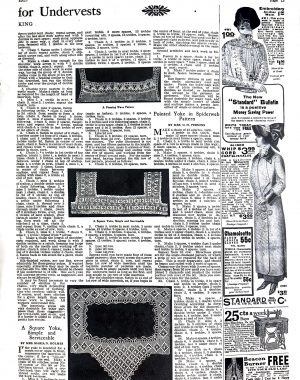
If you’re following me on Facebook you may have seen a photo I posted this week of a lovely find I recently received in the mail- several years of bound Ladies Home Journal magazines.  I have been itching to share some of the content with you, so today we’ve got hats and bonnets from the April, 1897 issue.  The layout of this page made it quite hard to share a scan (the magazines are a large format), and the layout was bizarre with very small pictures, so I have transcribed the article here, complete with the remastered pictures a little larger than they appeared in the original.


The fashionable materials for this Easter’s hats and bonnets are chip, manilla, Leghorn, Neapolitan, Madagascar and English straw, and all the straw braids, especially those imitating satin.  Black velvet is largely used for trimming with moiré and stain ribbons, deftly looped.  Ostrich tips and long feathers are in vogue, though flowers are given preference over everything.  The big Parma violets, as well as the enormous roses and poppies that were so generally used last season, continue to obtain, while camellias, tuberoses, white lilies, lilies-of-the-valley, blue hortensias, ragged robins and primroses are counted as quite new.

An extremely smart little bonnet (no. 1) is made of dull red straw, the front being turned back, exposing the hair, somewhat after the fashion of a Scotch cap.  Very slightly to one side of the front is a bunch of black ostrich plumes, caught in place by a Rhinestone clasp.  The simplicity of this bonnet is its special charm, while its style is cited to show that the woman who looks best when her hat is off her face has been considered.  A little bonnet (No. 2), which may or may not have ties, has a small frame covered with a drapery of white satin embroidered with jet, turquoises, and silver spangles.  It is raised on the left side and decorated with pink camellias and one large black silk poppy.

Click the link below to continue reading. If you see no link, you’re in the right place!

Continue reading